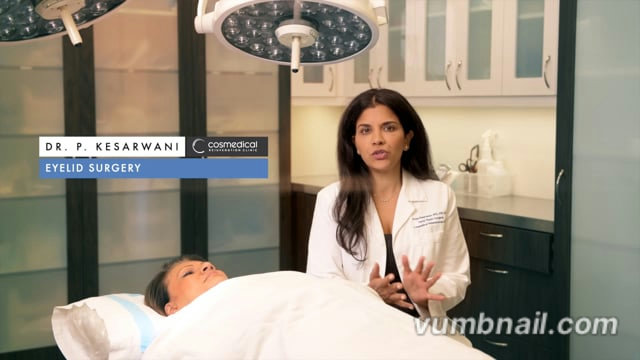
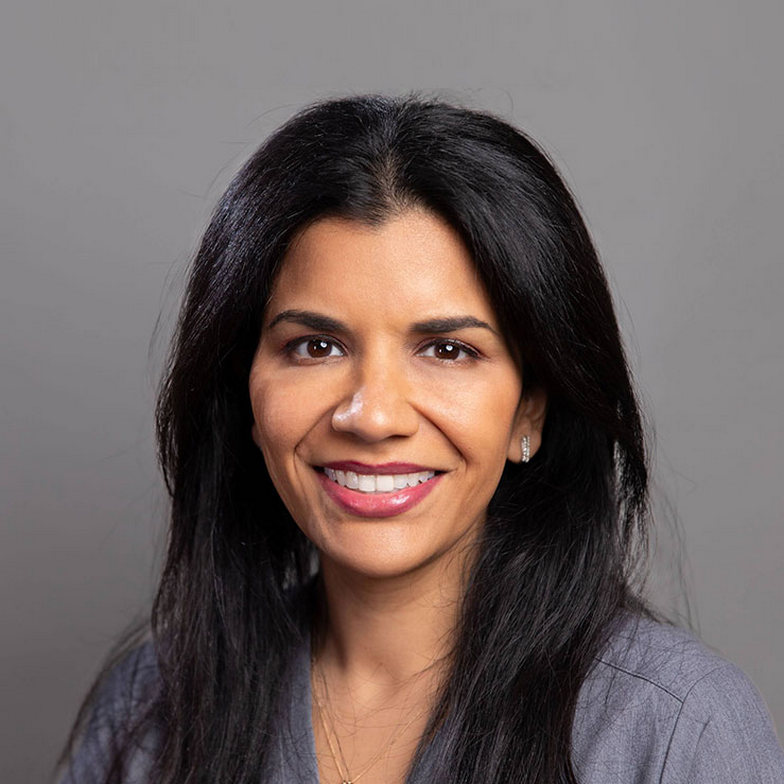
If heavy, drooping eyelids are making you look tired or blocking part of your vision, eyelid surgery can help. At Cosmedical Rejuvenation Clinic in Toronto, we perform blepharoplasty to improve both the appearance and function of your upper lids, lower lids, or both. The procedure is performed by our facial plastic surgeon, Dr. Priya Kesarwani.
Blepharoplasty, commonly known as eyelid surgery, is a surgical procedure that removes excess skin and repositions fat around the upper eyelids, lower eyelids, or both to restore a more alert, youthful appearance. Upper blepharoplasty can also improve peripheral vision when drooping skin blocks the upper visual field. The procedure typically takes 45 minutes to two hours depending on whether both upper and lower lids are treated, and is performed under local anaesthesia with sedation on an outpatient basis. Most patients return to daily activities within one to two weeks. At Cosmedical Rejuvenation Clinic in Toronto, eyelid surgery is performed by Dr. Priya Kesarwani, a board-certified Otolaryngologist with specialized training in facial plastic and reconstructive surgery. Her deep expertise in the delicate periorbital structures around the eyes helps ensure natural-looking results with minimal visible scarring.
Eyelid Lift in Toronto: What Eyelid Surgery Can Correct
Sagging or Loose Skin: When you have loose or sagging skin, folds can affect that natural contour of the upper eyelid and even impair vision.
Puffiness: Fatty deposits can make your eyelids appear puffy.
Bags: Bags under the eyes can give off a tired appearance. Addressing this through an eyelid lift grants a more alert and energetic aesthetic.
Excess skin or wrinkles: If your lower eyelid has either excess skin or fine lines, this procedure can help grant a youthful appeal.
Drooping: When the lower eyelids droop, the white below the iris can be seen. Drooping can also impair vision. This advanced procedure can help you achieve better sight capabilities.
Canthoplasty Toronto
The eyes are often the first place signs of aging appear, sometimes as early as your mid-twenties. Muscles become lax, collagen breaks down, and skin loses its elasticity, producing wrinkles and creases. Fat gathers in pockets, forming visible bags. These changes affect both the upper and lower eyelids, and they are difficult to conceal with makeup alone.
Canthoplasty is a type of eyelid surgery designed to treat these signs of aging, and restore your youthful fresh look.
If you say yes to the following, you may be a candidate for an eyelid lift:
You're healthy – You may be a good candidate if you're in good health and a non-smoker.
You have a realistic outlook – It's essential that you have a positive outlook and realistic goals when going into this procedure.
You don't have severe eye conditions – If you have serious eye conditions, you may not be a good candidate for an eyelid lift.
A complete assessment will be performed by Dr. Kesarwani during your initial consultation to determine whether you're a candidate.
The First Step
A personal consultation with Dr. P. Kesarwani is the first step toward realizing your goals in improving your facial appearance. She will take the time necessary to answer your questions and explain how this procedure can fulfill your aesthetic goals. You'll also be able to see before and after photos.
During your consultation, Dr. Kesarwani will review your medical history. She'll also show you before and after eyelid lift photos from patients she has performed the procedure on previously.
What is eyelid surgery called? Technically, eyelid surgery is referred to as blepharoplasty. Blepharoplasty resolves aesthetic issues affecting the upper and lower eyelids. These issues are referred to as the following:
The technical term for redundant or lax eyelid skin and muscle is dermatochalasis. Dermatochalasis can affect both the upper and lower eyelids. Decreased elasticity, thinning skin, and weakening connective tissues all contribute to this condition.
Steatoblepharon is the technical term referring to the prominence of fat pads located in the eyelids.
Upper Blepharoplasty
Upper blepharoplasty, or upper eyelid surgery, is a procedure that involves removing or repositioning extra skin, orbital fat, and muscle tissue from the upper eyelid. This surgery significantly reduces the appearance of saggy or puffy upper eyelids, resulting in a more alert and youthful look.
A study in the Aesthetic Surgery Journal reported that upper blepharoplasty not only enhanced the aesthetic appearance of participants but also improved their overall quality of life. This improvement was primarily due to the correction of vision impairment caused by excess upper eyelid skin.
Upper blepharoplasty typically involves a small incision along the natural crease within the upper eyelid, allowing for the removal or repositioning of tissues.
Medical research supports the safety and effectiveness of upper blepharoplasty. The Journal of Plastic, Reconstructive & Aesthetic Surgery reports that most patients were satisfied with their results and experienced improved vision and appearance.
Lower Blepharoplasty
Lower blepharoplasty, or lower eyelid surgery, removes puffiness, undereye bags, and wrinkles.
As per a Journal of Plastic, Reconstructive & Aesthetic Surgery report, lower blepharoplasty resulted in high patient satisfaction rates. Many participants reported improvements in self-esteem and social interactions following the procedure.
Lower eyelid lifts typically involve an incision either within the lower eyelid or along the eyelash margin. Tissues are removed or repositioned through the incisions, which are then closed.
Lower blepharoplasty can dramatically improve the eye area, but it cannot eliminate dark circles, fine lines caused by sun damage, or other signs of aging beyond the eyelids themselves. For a more complete facial rejuvenation, blepharoplasty is often performed alongside a facelift or brow lift.
Like any surgical procedure, blepharoplasty carries its own set of potential complications. Common complications of blepharoplasty include infection, bleeding, scarring, dry eyes, difficulty closing eyes, or even vision loss. According to a study in the Journal of Plastic, Reconstructive & Aesthetic Surgery, complications occur in approximately 3.85% of blepharoplasty procedures, a relatively low rate compared to other surgeries.
Risks Associated with Blepharoplasty
While severe complications are rare, they can occur. Hematoma, a collection of blood, and seroma a collection of fluid, can develop post-surgery and may require further procedures. Aesthetic complications, such as asymmetry or dissatisfaction with the cosmetic outcome, occur in about 1% of cases.
The most severe complication, although very rare, is vision loss. Retrobulbar hematoma (bleeding behind the eye) occurs in roughly 0.055 percent of cases, and permanent vision changes are even less common at approximately 0.005 percent.
Prevention and Management
Preventing complications starts with a thorough pre-operative evaluation to assess your health and eye condition. Be honest about your medical history and follow all pre- and post-operative instructions from Dr. Kesarwani's team.
If complications do occur, early detection makes a significant difference. Minor issues like dry eyes can be managed with lubricating drops, while more severe complications may require additional treatment. Regular follow-up appointments allow your surgeon to catch and address any concerns promptly.
Week-by-Week Blepharoplasty Recovery
Recovery from eyelid surgery follows a predictable pattern, and knowing what to expect at each stage helps you plan time off work and social commitments.
Days 1 to 3
Swelling and bruising peak during the first two to three days. Your surgeon will apply lubricating ointment that temporarily blurs your vision, so arrange for someone to drive you home. Use cold compresses for 10 to 15 minutes at a time and keep your head elevated, even while sleeping. Watery eyes and sensitivity to light are both normal during this stage.
Days 5 to 7
Sutures from external incisions are removed around day five to seven. If you had a transconjunctival lower lid procedure (incision inside the eyelid), you may not need suture removal at all. Swelling begins to subside noticeably, and most patients find they can read and watch screens comfortably again.
Week 2
Most patients feel comfortable being seen in public by day 10 to 14. Bruising fades or can be covered with makeup at this point. Contact lenses can typically be worn again after two weeks. Light daily activities resume, though you should still avoid bending over, heavy lifting, and strenuous exercise.
Weeks 3 to 4
About 90 percent of swelling resolves within the first month. You can return to exercise and more vigorous physical activity. Incision lines are still pink but flattening. Some patients notice mild tightness or numbness that continues to improve.
Months 2 to 3
Your final results begin to emerge. Scars are softening and fading into the natural eyelid crease or becoming invisible within the lower eyelid. Any residual asymmetry from uneven swelling resolves during this period.
Month 6
By six months, Dr. Kesarwani can make a full outcome assessment. Scars have matured and are typically very difficult to detect. The refreshed, alert appearance you see in the mirror is the lasting result of your procedure.
Asian Blepharoplasty (Double Eyelid Surgery)
Approximately 50 percent of people of East Asian descent are born without a visible crease in the upper eyelid, a feature sometimes called a "monolid." Asian blepharoplasty, also known as double eyelid surgery, creates a supratarsal crease in the upper lid. This is one of the most commonly requested cosmetic procedures among patients of Asian heritage, and it has a history stretching back to 1896, when Japanese surgeon Mikamo first documented the technique.
The goal of double eyelid surgery is not to create a "Western" eyelid. The aim is an ethnically appropriate, natural-looking crease that suits each patient's individual facial proportions. Crease height is typically placed between 6 and 8 millimetres above the lid margin for Asian patients, compared to the 8 to 12 millimetre range more common in non-Asian blepharoplasty.
Two Main Techniques
The non-incisional (suture) technique creates the crease using strategically placed internal sutures without removing skin. Recovery is faster with this approach, as swelling typically resolves within two weeks. The trade-off is that the crease may weaken over time, particularly in patients with thicker eyelid skin or significant fat deposits.
The full incisional technique creates the crease through a precise incision, allowing your surgeon to remove excess skin, muscle, and fat as needed. The result is a more defined, permanent crease. Recovery takes slightly longer, but the outcome is more predictable for patients who need tissue removal along with crease formation.
Dr. Kesarwani personalises the approach to each patient's anatomy and goals. During your consultation, she will assess your eyelid skin thickness, fat volume, and muscle structure to recommend the technique that will produce the most natural result for you.
Non-Surgical Alternatives to Eyelid Surgery
Not everyone needs surgery to address aging around the eyes. Several non-surgical treatments can improve the eye area, though each has limitations compared to blepharoplasty.
Botox brow lift: Small doses of Botox injected into the muscles that pull the brow downward can create a subtle lift of the upper eyelid area. Results last three to six months and work best for mild heaviness rather than significant skin excess.
Tear trough fillers: Hyaluronic acid fillers injected beneath the lower eyelid can smooth under-eye hollows and reduce the shadowing that makes dark circles more noticeable. Results last six months to two years depending on the product used.
Laser resurfacing: Fractional laser treatments stimulate collagen production, improve fine lines, and reduce pigmentation around the eyes. Multiple sessions may be needed, and results build gradually over several months.
When Surgery Makes More Sense
Non-surgical treatments work well for early signs of aging, but they cannot address true skin excess or fat herniation (visible fat bulging through weakened tissue). If you have significant hooding of the upper lid or prominent lower lid bags, surgery remains the most effective option. These non-surgical approaches are also temporary, requiring ongoing maintenance treatments.
Dr. Kesarwani can help you determine whether a non-surgical approach, surgery, or a combination of both will achieve the results you want. Many patients begin with non-surgical options and transition to surgery when the signs of aging progress.
Combining Eyelid Surgery with Other Procedures
Eyelid surgery is frequently performed alongside other facial procedures to create a more balanced rejuvenation. Combining procedures means one anaesthesia session and one recovery period instead of two separate ones.
Brow lift: When a low or heavy brow contributes to upper eyelid hooding, eyelid surgery alone may not be enough. A brow lift repositions the forehead and brow to a more youthful position, and performing both procedures together achieves a more complete result around the eyes.
Facelift: A facelift rejuvenates the lower face and jawline while eyelid surgery addresses the upper face. Together, they create a harmonious, natural-looking result from forehead to chin.
Facial fat transfer: As we age, we lose volume in the temples, cheeks, and around the eyes. Fat transfer restores that volume while blepharoplasty removes excess skin and repositions fat pads. The two procedures complement each other well.
Laser resurfacing: Performed at the same time as eyelid surgery, laser treatments can smooth fine lines and improve skin texture in areas that surgery alone does not address, such as crow's feet and the delicate skin just beneath the lower lashes.
The Key Benefits of an Eyelid Lift
1. Reduction In Eyelid Droopiness
A drooping eyelid can have numerous effects on a person's day-to-day lifestyle. It can prevent them from achieving perfect vision and cause a slight shadowing effect. It can also have an impact on the way a person sees themselves. And so many patients are now exploring the benefits of the eyelid lift. The eyelid lift works to remove the drooping skin around the eye and minimize the appearance of further drooping in the future, assuring both aesthetic and functional benefits for the patient.
2. Removal Of Wrinkles On The Lower Eyelid
The lower parts of our eyelids are usually prone to wrinkling because they highlight the expressions we make on a daily basis. Over time, these expressions cause lines to emerge on the lower eyelid area, impacting our appearance and potentially reducing the person's confidence. The eyelid lift can help remove wrinkles on the lower part of the eyelid, allowing a bright smile and captivating eyes that radiate across a room.
3. Eliminating Bags
Many patients also use the eye lift surgery to remove bags around the eyes. The eyelid surgery helps patients achieve that ideal appeal to their eyes and can remove the puffiness and redness that sometimes are found as a result of too much work and not enough sleep.
4. A Simple Treatment
One of the clear advantages of the eyelid lift treatment over other similar options is that the treatment is simple for the professional to complete and will have no negative impact on the function of the eye. In addition, because the incisions are hidden in the natural crease of the eyelids, the scarring is minimized post-surgery.
5. Quick Recovery
Because the procedure is only minimally invasive, recovery from the eyelid lift procedure can be quick. Patients are often able to go back to their normal day-to-day routines within a week of having the procedure completed.
Our expert surgical staff is available around the clock to answer your eyelid lift questions.
How much is eyelid surgery? How much does eyelid surgery cost? Blepharoplasty Cost In Toronto
If you're considering eyelid surgery in Canada, you're probably wondering about the cost. Let's break down the factors that influence the price and give you a general idea of what to expect.
1. Type of Surgery: There are different types of eyelid surgeries, which can affect the overall cost. Not only is cost based on whether the upper, lower or both eyelids are treated, surgical techniques are also considered.
2. Geographical Location: Major cities like Toronto or Vancouver tend to have higher prices compared to smaller towns simply because the cost of living is higher.
3. Facility Fees: The cost of the surgery can be affected by where it’s performed. Private clinics may charge more than hospitals, but they often provide a more personalized experience.
4. Anesthesia Fees: The type of anesthesia used (local or general) can influence the cost. General anesthesia, which requires an anesthesiologist, is more expensive.
5. Additional Costs: There may be additional costs for pre-surgery consultations, medical tests, post-surgery medications, and follow-up appointments.
How To Get Insurance To Pay For Eyelid Surgery
Cosmetic eyelid surgery isn't usually covered by health insurance. However, if the surgery is recommended to treat a medical condition, such as impaired vision caused by droopy eyelids, there may be some coverage. To get your procedure covered, first speak with your doctor.
How Long Does Eyelid Surgery Last?
Upper blepharoplasty results typically last five to seven years, and many patients enjoy the benefits for a decade or longer. Because the skin around the eyes is thin and continues to age naturally, some patients eventually develop new laxity, but a repeat procedure is straightforward if needed.
Lower blepharoplasty results tend to be even more durable. Fat removal from the lower lids is generally permanent, and most patients rarely need a second lower eyelid procedure.
Several factors affect how long your results last: sun exposure, genetics, skin care habits, and whether you smoke. Wearing sunscreen daily and avoiding smoking are two of the most effective ways to preserve your outcome. Follow the post-procedure care instructions from Dr. Kesarwani's team closely for the best long-term results.
Frequently Asked Questions About Eyelid Surgery in Toronto
How much does eyelid surgery cost in Toronto?
Eyelid surgery at Cosmedical starts at $4,000 for upper blepharoplasty and can range up to $10,400 when treating both upper and lower lids. The total fee includes the surgeon's fee, facility costs, and anaesthesia. Factors that affect the price include whether you are having upper, lower, or combined surgery, and the specific technique used. Dr. Kesarwani provides a detailed quote after your consultation. Visit our fees and financing page for more information.
How long does blepharoplasty recovery take?
Most patients feel comfortable being seen in public within 10 to 14 days. Sutures are removed around day five to seven, and bruising fades steadily over the first two weeks. Light activities can resume within a few days, though strenuous exercise should wait until weeks three to four. Final results are typically visible by three to six months as residual swelling resolves and scars mature.
What is the difference between upper and lower blepharoplasty?
Upper blepharoplasty removes excess skin and sometimes fat from the upper eyelid through an incision hidden in the natural eyelid crease. It addresses hooding and can improve peripheral vision blocked by drooping skin. Lower blepharoplasty targets under-eye bags, puffiness, and excess skin below the eye. The incision is made either just below the lash line or inside the lower eyelid (transconjunctival approach), depending on what needs to be corrected. Many patients have both procedures performed together.
Will I have visible scars after eyelid surgery?
Scarring from eyelid surgery is typically very well concealed. Upper blepharoplasty incisions follow the natural crease of the eyelid, so the scar hides within the fold when your eyes are open. Lower blepharoplasty scars are placed just below the lash line or, with the transconjunctival technique, entirely inside the eyelid where there is no visible scar at all. Scars continue to fade and soften over six months.
Can eyelid surgery improve my vision?
Yes. When excess upper eyelid skin droops far enough to hang over the lashes, it can block your upper and peripheral visual field. Upper blepharoplasty removes this excess tissue and restores a wider field of vision. If your eyelid droop is severe enough to be documented on a visual field test, the procedure may qualify for partial insurance coverage through OHIP.
What is Asian blepharoplasty (double eyelid surgery)?
Asian blepharoplasty creates a supratarsal crease in patients who have a single eyelid fold (monolid), which is a natural feature in approximately 50 percent of people of East Asian descent. The procedure uses either a non-incisional suture technique or a full incisional approach, depending on the patient's anatomy. The goal is to create a natural-looking, ethnically appropriate crease, not a "Western" eyelid. Crease height is typically set at 6 to 8 millimetres for Asian patients.
Is eyelid surgery painful?
Most patients report minimal pain. The procedure is performed under local anaesthesia with sedation, so you will not feel anything during surgery. Afterwards, mild soreness, tightness, and a gritty sensation in the eyes are common for the first few days. Over-the-counter pain relief and cold compresses are usually enough to manage any discomfort. Most patients describe the recovery as easier than they expected.
Can I combine eyelid surgery with a brow lift?
Yes, and it is quite common. A heavy or low brow can contribute to upper eyelid hooding, and in some cases, a brow lift alone can reduce the amount of excess skin on the upper lid. When both issues are present, performing blepharoplasty and a brow lift together produces a more complete result. Dr. Kesarwani will assess your brow position during your consultation to determine whether you would benefit from the combination.
How long do blepharoplasty results last?
Upper blepharoplasty results typically last five to seven years, with many patients seeing benefits for a decade or longer. Lower blepharoplasty results are even more durable because fat removal is generally permanent, and most patients rarely need a repeat lower procedure. Sun protection, a consistent skincare routine, and avoiding smoking all help extend the longevity of your results.
What are the risks of eyelid surgery?
All surgery carries some risk. Common side effects of blepharoplasty include temporary dry eyes, bruising, swelling, and light sensitivity. Serious complications are rare: retrobulbar hematoma (bleeding behind the eye) occurs in roughly 0.055 percent of cases, and permanent vision changes are even less common at approximately 0.005 percent. Dr. Kesarwani discusses all risks in detail during your consultation and takes every precaution to minimize them.
Does OHIP or insurance cover eyelid surgery?
Cosmetic blepharoplasty is not covered by OHIP or private insurance. However, if excess upper eyelid skin measurably impairs your vision (confirmed by a visual field test), the functional component of the surgery may qualify for partial coverage. Your family doctor or ophthalmologist can provide a referral, and Dr. Kesarwani's team can help guide you through the process.
When can I wear contacts and makeup after blepharoplasty?
Contact lenses can usually be worn again about two weeks after surgery, once swelling has subsided enough for a comfortable fit. Eye makeup should also be avoided for roughly two weeks to reduce the risk of irritation or infection at the incision sites. Dr. Kesarwani will give you specific timelines based on how your healing progresses.
What is the best age for eyelid surgery?
There is no single ideal age. Most blepharoplasty patients are between 35 and 65, but candidacy depends on your anatomy rather than a number. Some people develop significant hooding or under-eye bags in their thirties due to genetics, while others do not need the procedure until much later. Asian blepharoplasty patients often seek the procedure in their twenties. Dr. Kesarwani evaluates each patient individually.
What is a transconjunctival blepharoplasty?
A transconjunctival blepharoplasty is a lower eyelid technique where the incision is made on the inside of the eyelid (through the conjunctiva) rather than on the skin surface. This approach is ideal for patients who have puffy lower lids caused by fat herniation but do not need excess skin removed. The main advantage is that it leaves no visible external scar. Recovery is similar to standard lower blepharoplasty, and sutures may dissolve on their own.
Can men get eyelid surgery?
Absolutely. Blepharoplasty is one of the most popular cosmetic procedures among men. According to the ASPS, it consistently ranks in the top five cosmetic surgeries performed on men each year. Men develop the same eyelid concerns as women: hooding, puffiness, and under-eye bags that create a tired or aged appearance. The surgical approach is adjusted for male facial anatomy to maintain a natural, masculine look.
Why Choose Dr. Priya Kesarwani
Dr. Priya Kesarwani is the facial plastic surgeon at Cosmedical Rejuvenation Clinic. As a board-certified Otolaryngologist Head and Neck Surgeon, her training encompasses the orbital anatomy, nasal structures, and facial nerve pathways surrounding the eye, giving her a depth of knowledge that is directly relevant to eyelid surgery.
You'll speak with Dr. Priya Kesarwani directly during your initial consultation. She has a gentle approach and an unwavering commitment to achieving the beautiful, natural-looking results you want. She takes the time to discuss your goals and assess your situation before providing you with a custom-tailored solution. No detail is overlooked. You will appreciate her fastidious and exacting nature, traits that are essential when performing any procedure targeting the delicate structures around the eyes.
Dr. Kesarwani is dedicated to delivering beautiful results while maintaining excellent patient safety and achieving superior patient satisfaction.






Call (647) 493-8177