With age, skin loses its elasticity, sags and becomes lined and wrinkled. The fat underneath the skin descends because of gravity into the jowls, neck and the folds between the nose and corners of the mouth, often making people appear older than their years. A facelift in Toronto will restore the rejuvenated, attractive appearance of youth, while maintaining your natural expression.
A facelift, known medically as rhytidectomy, is a surgical procedure that tightens sagging skin and repositions deeper facial tissues to restore a more youthful, natural appearance. The operation typically takes two to five hours and is performed under general anaesthesia or local anaesthesia with sedation, usually on an outpatient basis. Most patients return to daily activities within two to three weeks, and results commonly last ten years or longer depending on skin quality and lifestyle factors. At Cosmedical Rejuvenation Clinic in Toronto, facelifts are performed by Dr. Priya Kesarwani, a board-certified Otolaryngologist with specialized training in facial plastic and reconstructive surgery. Dr. Kesarwani's preferred technique is the deep plane facelift, which lifts the deeper tissues and the skin as one unit for a natural result, and she tailors each facelift to your facial structure and goals. A personal consultation is the best way to explore whether a facelift is right for you.
Toronto Facelift Rhytidectomy
A facelift repositions and smoothes the facial tissues. Excess fat is removed, muscles are tightened, and the skin on the face and neck is re-draped, leaving scars that are barely noticeable. We use an advanced technique called hydrodissection that improves results and shortens recovery. Positioning of the scars tends to be well-hidden in the natural creases of the facial contours. Silicone scar gel can help reduce their appearance. You can read more about silicone scar gel here.
Please note that surgical scars do tan like the rest of the skin when exposed to the sun. However, they don’t fade and can remain permanently darkened. As a result, diligent sunscreen use is particularly important for the first 12-18 months after surgery. We have a variety of non-comedogenic options in the office that we can help select for you depending on your skin type.
Best Age For A Facelift
There's no single "best" age for a facelift, as it depends on individual factors such as skin condition, genetics, and personal goals. Generally, most people consider facelifts between their 40s and 60s, but some may opt for the procedure earlier or later.
If you're healthy and want to tighten sagging tissues in the mid to lower face, a facelift may be right for you.
The cost of a facelift in Canada can vary significantly depending on several factors, but generally ranges from about $10,000 to $30,000. At Cosmedical, a short scar or full facelift starts from $20,000.
These prices generally include the surgeon's fee, facility costs, and anaesthesia fees. Additional expenses may include prescription medications and recovery supplies. Potential revisions or touch-ups incur extra costs.
Third-party financing companies are available should assistance be required.
Why Dr. Priya Kesarwani Performs Deep Plane Facelifts
Older facelift techniques tighten the skin, which can leave a pulled or "windswept" look that fades as the skin stretches again. A deep plane facelift works underneath: it releases the facial ligaments and lifts the deeper layer (the SMAS) and the skin together, so the cheeks, jowls and neck move back up as one unit and the skin lies flat without tension.
That is why Dr. Priya Kesarwani favours it. The result looks like a rested version of you rather than a tightened face, and deep plane results are associated with the longest-lasting outcomes, often 12 to 15 years or more. Her training in otolaryngology–head and neck surgery and her fellowship in facial plastic surgery give her a detailed knowledge of the facial nerve and the deep tissues this technique works in.
Facelifts at Cosmedical start from $20,000. At your consultation she'll assess your face and neck and explain whether a deep plane facelift is right for you. Read about Dr. Priya Kesarwani.
Candidates for a Facelift
A facelift works best for people who have noticeable sagging in the midface, jowls along the jawline, deep nasolabial folds, or loose skin in the neck. You may also notice that your face looks tired or older than you feel, even when you are well rested.
Good candidates are generally in good overall health. According to the American Society of Plastic Surgeons, non-smokers with realistic expectations tend to have the best outcomes. If you smoke, you will need to stop at least four weeks before and after surgery, as smoking restricts blood flow and significantly increases the risk of skin healing problems.
Most patients are in their 40s to 60s, though there is no strict age limit. Some people in their late 30s develop early jowling due to genetics, while others in their 70s are healthy enough for the procedure. Age alone is not a deciding factor.
A facelift may not be the right choice if your concerns are limited to fine lines, sun damage, or minor volume loss. In those cases, treatments like dermal fillers, Botox, or laser resurfacing can often deliver the improvement you are looking for without surgery. Uncontrolled high blood pressure or certain bleeding disorders may also make a facelift less suitable.
During your consultation, Dr. Kesarwani will assess your facial anatomy, skin quality, and health history to determine whether a facelift is the best path toward your goals.
Facelifts in Toronto are very individualized procedures. Dr. Kesarwani's preferred technique is the deep plane facelift. “Deep plane” describes repositioning the SMAS and deeper tissues beneath the skin. The incision is a separate choice: a “full” incision or a “short scar” incision, depending on your facial structure and goals.
We often combine facelifts with fat grafts. This is to restore the fullness that better resembles a youthful appearance.
The First Step
A personal consultation with Dr. Priya Kesarwani is the first step toward reaching your goals. During the consultation, she will evaluate your face, discuss your wishes and will take the time to answer your questions and address your concerns. A facelift can be done alone or in conjunction with other cosmetic procedures in Toronto such as a brow lift, eyelid surgery, facial implants or nose reshaping.
Face Lift Before And After
You’ll have an opportunity to see before and after facelift photos to see some examples of past patients.
Facelift techniques have evolved significantly since the early days of skin-only lifts. Modern facelifts work on the deeper structures of the face, producing results that look natural and last longer. The right technique depends on your anatomy, the degree of aging, and your goals.
SMAS Facelift
The SMAS (superficial musculoaponeurotic system) is a fibrous layer of tissue that connects the facial muscles to the skin. First described by Mitz and Peyronie in 1976, the SMAS layer became the foundation of modern facelift surgery. In an SMAS facelift, the surgeon lifts and repositions this deeper layer independently from the skin, creating a more lasting result than older skin-only techniques. By tightening the SMAS, the surgeon can lift sagging jowls and smooth nasolabial folds without placing tension on the skin itself. Results from an SMAS facelift typically last 10 to 12 years.
Deep Plane Facelift
A deep plane facelift goes one step further by releasing the tissue below the SMAS layer and lifting the skin and SMAS as a single unit. This allows the surgeon to reposition the deeper fat pads and release key facial ligaments, which is particularly effective for correcting midface sagging and deep nasolabial folds. Because the lift happens at a deeper level, the skin redrapes smoothly without tension, producing a very natural appearance. Deep plane facelifts are associated with the longest-lasting results, often 12 to 15 years or more.
Dr. Priya Kesarwani favours the deep plane facelift because it moves the deeper tissues instead of pulling on the skin, which keeps results natural. “Deep plane” is not an incision. The incision, short scar or full, is chosen separately, and the next section explains both.
Dr. Kesarwani's preferred technique is the deep plane facelift, described above. That describes the lift beneath the skin. Your scars depend on the incision, which is a separate choice: short scar or full. She'll recommend the incision that suits you.
Short Scar Facelift
The Short Scar Facelift, or S-Lift, is designed to rejuvenate your appearance and combat early signs of aging. This technique is less invasive than traditional for full scar facelifts, resulting in shorter scars (hence the name) and a quicker recovery time.
The Short Scar Facelift primarily targets the lower third of the face, focusing on the jowls and neck. It's an excellent choice for those experiencing early to moderate sagging in these areas but only requires a traditional facelift's comprehensive restructuring.
You'll be administered anesthesia. Small incisions are made along the hairline and around the ear. The specific length and location of the incisions can vary based on your specific needs but are typically much shorter than those used in traditional facelifts.
The skin is lifted, underlying tissues are tightened, and excess skin is removed. The remaining skin is then re-draped for a smoother, firmer contour. The incisions are carefully closed with sutures.
Postoperatively, swelling and bruising are to be expected but are usually less intense compared to a traditional facelift. Typically, patients can return to routine activities within a week, although everyone's healing process varies.
The Short Scar Facelift offers a refreshed and rejuvenated appearance, with less noticeable scarring and a quicker recovery time. However, it's important to remember that the procedure is not as comprehensive as a traditional facelift and may not be suitable for those with severe sagging or drooping skin.
Full Facelift
A Full Facelift, often referred to as a Traditional Facelift, offers more extensive rejuvenation, making it ideal for those with significant sagging skin, deep wrinkles, and prominent jowls.
After general anesthesia is administered, incisions are made. These typically start at the hairline and go around the ear to the lower scalp. These incisions are longer than those of a short scar facelift, making this procedure capable of more dramatic improvements.
Underlying tissues are adjusted, while excess fat and skin are removed. The skin is then repositioned, and excess skin is removed. The incisions are then closed with sutures.
You can expect swelling and bruising post-surgery, which should subside over a couple of weeks. Recovery time for a full facelift is generally longer than a short scar facelift, often requiring two to three weeks before resuming normal activities.
Short Scar vs Full Facelift
The main differences between these two incisions are the extent of correction involved, the scarring and the length of recovery time. While a full facelift provides a more dramatic improvement, a short scar facelift is best suited for those experiencing minor to moderate signs of aging.
Facelift Recovery: How Soon After a Face Lift can I Wear Makeup?
The answer to this question depends on how confident you are in your makeup-applying abilities.
Makeup and Face Lifts
The swelling from face lifts is not aggravated by makeup, as far as we can tell. If possible, use products that don’t block pores, as the last thing you need is to get pimples while you still have swelling.
Where makeup becomes a problem is near the sutures. Makeup is not sterile and can both irritate and infect a wound. If your makeup never gets smeared or ends up where it shouldn’t be, you can apply it five millimetres away from any sutures. Still, it is better to wait until the incisions are completely healed and the sutures have been removed.
Other cosmetic routines can also be damaging. Tweezing any hairs on your face is a bad idea, as it puts pressure on the sutures and can cause more swelling. Dr. Kesarwani allows patients to wash their hair and face pretty normally 24 hours after the drains are removed, usually by the third day after surgery. No matter how minor the routine, be sure to consult with your surgeon about whether it will be safe in those critical recovery days.
After the sutures are removed and the incisions have closed, usually within 2 weeks apply makeup to your heart’s desire. It can be particularly effective in hiding any remaining post-surgical swelling.
As with any other surgical procedure, a face life will result in swelling that could last a few weeks. The swelling may also compromise capillaries, leading to bruising, especially around the eyes. These blemishes are best covered up using camouflage cosmetics, special products that may be recommended by your cosmetic surgeon.
The most important tool in camouflage cosmetics is concealer. This can hide not only pink blemishes, but also outright bruising. For bruising immediately around the eyes, opt for something a little lighter, like foundation or eye makeup.
Another excellent tool is color correcting makeup. Some swelling may result in a yellowish ting, which fortunately is easily correctable with lavender.
To deal with swelling, especially surrounding a nose implant, you can use the technique of contouring. Contouring requires a highlighter, a color two shades lighter than your foundation, and a shadow, a color two shades darker. Use highlights and shadows to emphasize the angles of your nose, chin, and cheekbones. This will minimize the effects of swelling.
It’s important to remember that all these problems are temporary. Most patients are comfortable wearing makeup, going out, and showing off their new face about two or three weeks after the procedure.
How To Reduce Swelling On Face After Surgery
Reducing facial swelling after surgery is an essential part of the recovery process. There are several effective methods you can use to minimize swelling and promote healing.
One of the most common and effective approaches is applying a cold compress to the affected area. Dr. Kesarwani may recommend that you use a cool compress for 15-20 minutes at a time, every 1-2 hours for the first 24-48 hours after surgery to help constrict blood vessels and reduce inflammation.
Keeping your head elevated, even while sleeping, is another crucial step. Use extra pillows to prop yourself up, as this helps reduce blood flow to the face and minimize swelling. Drink plenty of fresh water since it helps flush out toxins and reduce fluid retention.
It's also advisable to avoid salt and stressful situations, as they can contribute to fluid retention and swelling. Rest is crucial during this time.
Some patients find relief by using arnica gel or taking arnica tablets, which may help reduce swelling and bruising. Similarly, eating fresh pineapple or taking bromelain supplements can be beneficial, as they contain enzymes that may help reduce swelling. However, please let us know before you start taking any supplements so we can make sure that they're safe for you.
It's important to avoid heat sources like hot showers, saunas, and direct sunlight, as these can increase swelling. Compression garments can also help if Dr. Kesarwani recommends them for you.
Remember that some swelling is normal after facial surgery and can take months to fully subside. If you experience unusually severe swelling, pain, or any unusual symptoms, let us know as soon as possible.
Facelifts typically last between 10 years or more on average. However, these factors can affect your results:
The individual's skin quality and elasticity
The type of facelift procedure performed
The patient's age at the time of surgery
Lifestyle factors (sun exposure, smoking, diet, etc.)
Skincare routine and maintenance
While a facelift can significantly rejuvenate your facial appearance, it doesn't stop the natural aging process. Some patients may choose to have touch-up procedures or non-surgical treatments in the years following their initial facelift to maintain results.
Week-by-Week Facelift Recovery
Knowing what to expect during recovery helps you plan your time off work, arrange help at home, and feel confident about the healing process. Every patient heals at a slightly different pace, but the following timeline reflects what most facelift patients experience.
Days 1 to 3
Swelling and bruising are at their peak during the first few days. Dr. Kesarwani may place small drains to prevent fluid buildup, which are typically removed within one to three days. Prescription pain medication keeps you comfortable, and keeping your head elevated (even while sleeping) helps reduce swelling. Light walking around the house is encouraged to promote circulation.
Week 1
Sutures or staples are usually removed between days five and seven. Swelling begins to decrease noticeably, though bruising may still be visible. You should avoid bending over, lifting anything heavy, or any activity that raises your blood pressure. Dr. Kesarwani typically allows gentle face and hair washing by the third day after drains are removed.
Week 2
Bruising fades significantly during the second week, and most patients feel well enough to handle light activities at home. You may be able to drive once you are off prescription pain medication and can turn your head comfortably. Makeup can cover any remaining discolouration at this stage.
Weeks 3 to 4
Most patients with desk jobs are already back at work, typically two to three weeks after surgery. Light exercise such as walking is usually safe, but vigorous workouts, heavy lifting, and contact sports should wait. Social activities can resume, and the majority of visible swelling has settled.
Weeks 4 to 6
Moderate exercise can typically begin around week four to six, with Dr. Kesarwani's approval. Residual tightness and minor swelling continue to improve. Most people feel comfortable attending social events and resuming their normal routine.
Months 2 to 3
Your face will start to feel "back to normal" during this period. Numbness or tingling near the incisions gradually resolves for most patients. The Cleveland Clinic notes that it can take two to three months for the face to feel natural again after surgery.
Months 6 to 12
Final results become fully visible as the last traces of deep swelling resolve and scars mature. Incision lines continue to fade and soften over this period. Sun protection is essential during the first year to prevent scars from darkening permanently.
Combining a Facelift with Other Procedures
Many patients choose to combine a facelift with one or more complementary procedures. Addressing multiple areas of the face during a single surgery means one anaesthesia session and one recovery period instead of two or three separate ones.
The most common combination is a facelift with a neck lift. A facelift addresses the midface and jowls, while a neck lift targets loose skin, excess fat, and banding in the neck. The two procedures together create a balanced, natural result from the cheeks down to the collarbone.
An eyelid surgery (blepharoplasty) is another frequent pairing, since a facelift does not address drooping or puffy eyelids. For patients with a heavy or sagging brow, a brow lift can rejuvenate the upper face while the facelift handles the lower two-thirds.
Fat transfer is often used alongside a facelift to restore lost volume in the cheeks, temples, and under-eye hollows. Dr. Kesarwani frequently combines facelifts with fat grafting to recreate the fullness that is characteristic of a younger face.
During your consultation, Dr. Kesarwani will discuss which combinations make sense for your goals and explain how combining procedures affects your recovery.
Facelift Risks and Safety
All surgery carries some degree of risk, and a facelift is no exception. Understanding the potential complications helps you make an informed decision and take steps to minimise them.
Hematoma (a collection of blood under the skin) is the most commonly reported complication after a facelift. It typically occurs within the first 24 hours and is more common in patients with elevated blood pressure. Maintaining stable blood pressure before and after surgery is one of the most effective ways to reduce this risk.
Temporary numbness near the incision sites and cheeks is normal after a facelift. Sensation returns gradually over weeks to months for the large majority of patients. A 2025 meta-analysis in Aesthetic Plastic Surgery, covering over 15,000 facelift procedures, found that the pooled rate of permanent motor nerve injury was less than 0.1%.
Infection after a facelift is uncommon. Careful surgical technique, a sterile environment, and proper wound care during recovery all help keep this risk very low.
Smoking is the single biggest modifiable risk factor for facelift complications. Nicotine constricts blood vessels and starves the skin of oxygen, which can lead to delayed healing, skin loss, and poor scarring. Patients must stop all nicotine products at least four weeks before surgery and four weeks after.
Dr. Kesarwani minimises risks through thorough preoperative planning, careful technique selection for each patient, and attentive follow-up care. She will review your complete health history during your consultation to identify and address any factors that could affect your outcome.
Book your facelift consultation
You'll meet with Dr. Priya Kesarwani personally. She is a Fellow of the Royal College of Surgeons of Canada in otolaryngology–head and neck surgery, with fellowship training in facial plastic and reconstructive surgery. She'll assess your face and neck, explain how a deep plane facelift would work for you, and show you before and after photos from her own patients.
Frequently Asked Questions About Facelifts in Toronto
How much does a facelift cost in Toronto?
At Cosmedical, a short scar or full facelift starts from $20,000. The final fee depends on the extent of the procedure. The total fee at Cosmedical includes the surgeon's fee, facility costs, and anaesthesia. Additional costs may include prescription medications and recovery supplies. Dr. Kesarwani provides a detailed quote after your consultation so you know exactly what to expect. Visit our fees and financing page for more information.
How long does a facelift last?
Results from a full facelift typically last 10 years or longer. Deep plane techniques can produce results lasting 12 to 15 years. The exact duration depends on your skin quality, genetics, sun exposure, smoking habits, and skincare routine. While a facelift turns back the clock, it does not stop aging entirely. Many patients choose non-surgical touch-ups in the years that follow to maintain their results.
What is the best age for a facelift?
There is no single "best" age. Most facelift patients are between 40 and 65, but candidacy depends on your anatomy and concerns rather than a number. Some people develop jowls and sagging in their late 30s due to genetics, while others do not need a facelift until their 70s. Dr. Kesarwani evaluates each patient individually to determine the right timing.
What is a deep plane facelift?
A deep plane facelift lifts the skin and the SMAS layer as a single unit by releasing tissue below the SMAS. This allows the surgeon to reposition deeper fat pads and release key facial ligaments, which is especially effective for midface sagging and deep nasolabial folds. The skin redrapes without tension, creating a very natural look. Deep plane facelifts tend to produce the longest-lasting results among facelift techniques. It is the technique Dr. Priya Kesarwani favours.
What is the difference between a mini facelift and a full facelift?
A mini facelift uses shorter incisions and targets mild to moderate sagging in the lower face and jawline. However, Dr. Kesarwani does not perform mini facelifts because they do not achieve satisfying results. A full facelift addresses more significant aging with longer incisions that extend around the ear and into the hairline. Recovery takes two to three weeks, but results are more dramatic and longer lasting. Dr. Kesarwani will recommend the approach that best suits your needs.
How long is facelift recovery?
Most patients take two to three weeks off work after a full facelift. Sutures are removed around days five to seven. Bruising and swelling peak in the first few days and improve steadily. By week two, many patients feel comfortable going out with makeup. Light exercise can resume around week three to four, and final results are typically visible by six to twelve months as residual swelling resolves and scars mature.
Will I have visible scars after a facelift?
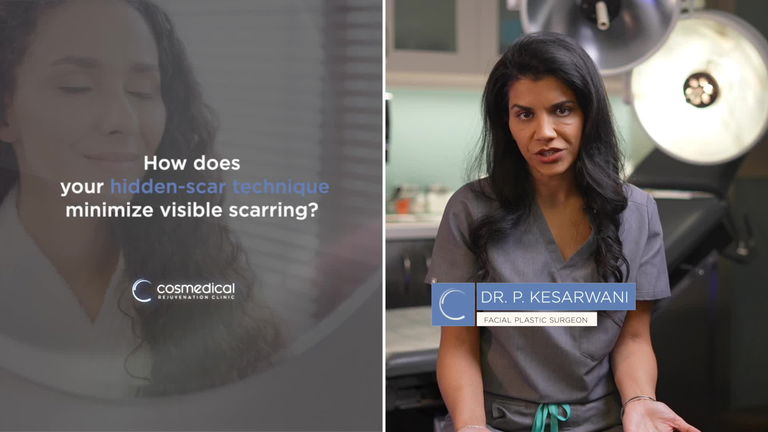
Facelift incisions are placed in natural creases around the ear and along the hairline where they are well hidden. With Dr. Kesarwani's short scar technique, incisions are even shorter. Scars fade significantly over the first year and are typically difficult to detect once fully healed. Silicone scar gel and diligent sun protection during the first 12 to 18 months help scars heal with the best possible appearance.
Can a facelift be combined with a neck lift?
Yes, and this is the most common combination. A facelift addresses sagging in the midface and jowls, while a neck lift targets loose skin, excess fat, and muscle banding in the neck. Performing both at the same time means one anaesthesia session and one recovery period. Dr. Kesarwani frequently performs these procedures together to create a balanced result from the cheeks to the collarbone.
What is the SMAS layer?
The SMAS (superficial musculoaponeurotic system) is a layer of fibrous tissue that sits beneath the skin and connects the facial muscles to the overlying skin. First described in the surgical literature by Mitz and Peyronie in 1976, it is the structural layer that modern facelift techniques target. Tightening the SMAS produces longer-lasting, more natural results than older skin-only techniques because the lift comes from the deeper structures rather than pulling on the skin.
Does a facelift look natural?
A well-performed facelift should look natural. The "windswept" or overly tight appearance associated with older techniques was the result of pulling only on the skin. Modern techniques like the SMAS and deep plane approach lift the deeper structures of the face, allowing the skin to settle naturally. Dr. Kesarwani tailors each procedure to your individual facial anatomy, which is key to achieving results that look refreshed rather than "done."
How do I choose a facelift surgeon?
Look for a surgeon who is board certified and has specific training in facial surgery. Dr. Priya Kesarwani is a board-certified Otolaryngologist with specialized training in facial plastic and reconstructive surgery. Ask to see before-and-after photos of previous patients, inquire about the surgeon's experience with different facelift techniques, and pay attention to how thoroughly they listen to your goals during the consultation.
Is a facelift painful?
Most patients describe discomfort after a facelift as mild to moderate rather than severely painful. The procedure is performed under general anaesthesia or local anaesthesia with sedation, so you feel nothing during surgery. Prescription pain medication manages discomfort for the first few days of recovery. By the end of the first week, most patients transition to over-the-counter pain relief. Tightness and a sensation of pressure are common and gradually ease over the following weeks.
What are the risks of a facelift?
The most commonly reported complication is hematoma (a collection of blood under the skin), which typically occurs within the first 24 hours and is closely linked to elevated blood pressure. Temporary numbness near incision sites is normal and resolves over weeks to months. Permanent nerve injury is rare. Infection rates are very low with proper surgical technique and wound care. Smoking significantly increases the risk of healing complications. Dr. Kesarwani discusses all risks thoroughly during your consultation.
Can I finance my facelift?
Yes. Third-party financing companies offer payment plans that allow you to spread the cost of your facelift over time. Cosmedical can provide information about financing options during your consultation. Visit our fees and financing page for details.
What is hydrodissection?
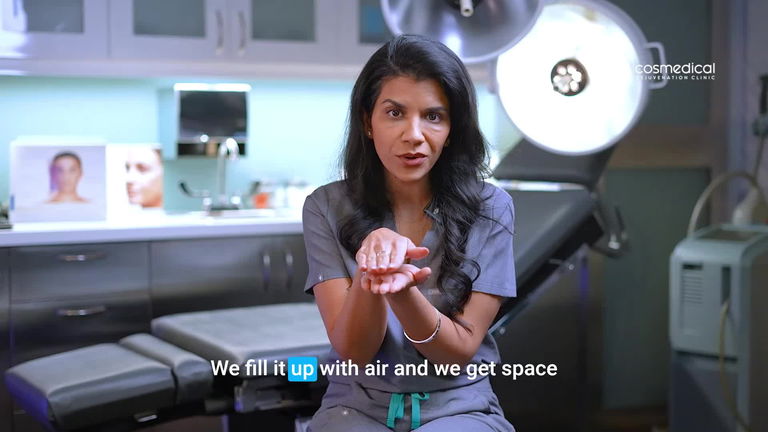
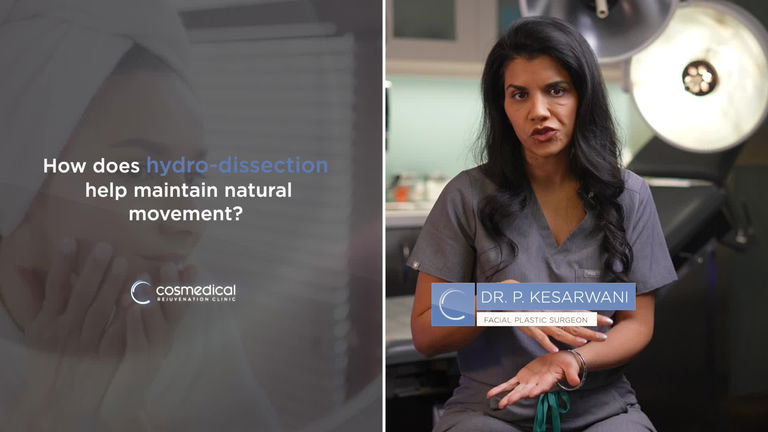
Hydrodissection is an advanced technique used during facelift surgery in which a pressurised stream of fluid is used to gently separate tissue layers. This reduces the need for sharp dissection, which can lower bruising and swelling. Dr. Kesarwani uses hydrodissection to improve results and shorten recovery time for her facelift patients.
When can I return to work after a facelift?
Patients with desk jobs typically return to work two to three weeks after a full facelift. Those with physically demanding jobs may need three to four weeks or longer. Dr. Kesarwani will give you personalised guidance based on your procedure and healing progress.
Will a facelift help my neck?
A facelift can improve the upper neck and jawline, but significant neck concerns such as loose skin below the jawline, excess fat, or platysmal banding are better addressed with a dedicated neck lift. Many patients choose to have both procedures performed together for a balanced result. Dr. Kesarwani will assess your neck during your consultation and recommend the best approach.
What are non-surgical alternatives to a facelift?
For patients with early signs of aging, non-surgical options can delay the need for a facelift. Dermal fillers restore lost volume, Botox relaxes dynamic wrinkles, Sculptra stimulates collagen production, and laser skin tightening can improve mild laxity. These treatments cannot replicate the results of a surgical facelift for moderate to significant sagging, but they are effective for maintaining results after a facelift.
How do I prepare for facelift surgery?
Stop smoking at least four weeks before surgery. Avoid aspirin, ibuprofen, and blood-thinning supplements for two weeks prior, as these increase the risk of bleeding. Arrange for someone to drive you home and stay with you for the first night. Stock up on soft foods, extra pillows to keep your head elevated, and any prescriptions Dr. Kesarwani recommends. She will provide a complete list of preoperative instructions during your consultation.
Can men get facelifts?
Yes. Facelifts are increasingly popular among men who want to maintain a youthful, competitive appearance. The surgical approach is adjusted to account for differences in male anatomy, including thicker skin, a stronger jawline, and facial hair. Incisions are placed to preserve the natural hairline and beard pattern. Dr. Kesarwani has experience performing facelifts for both men and women.
Why choose dr. PRIYA KESARWANI
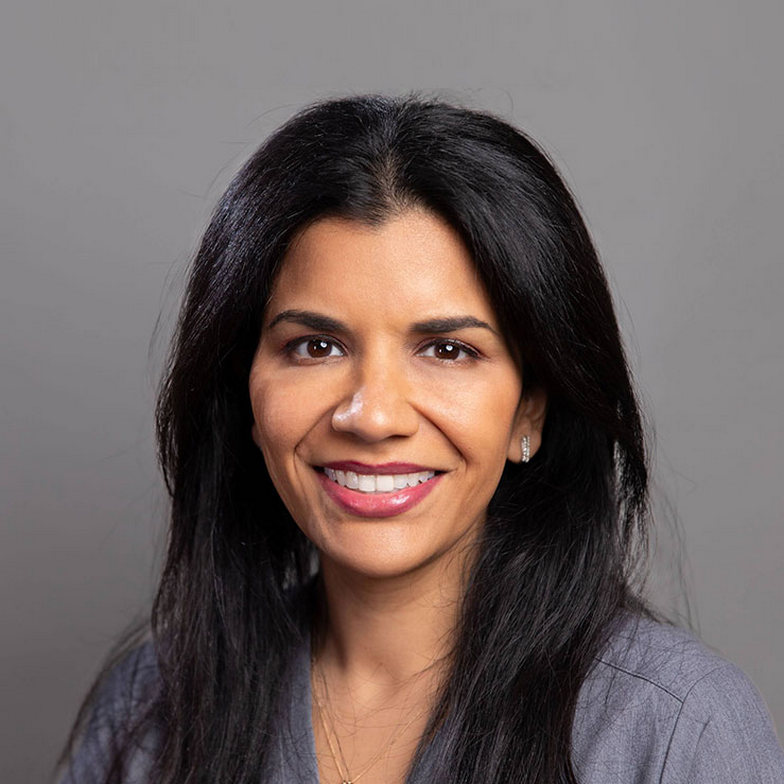
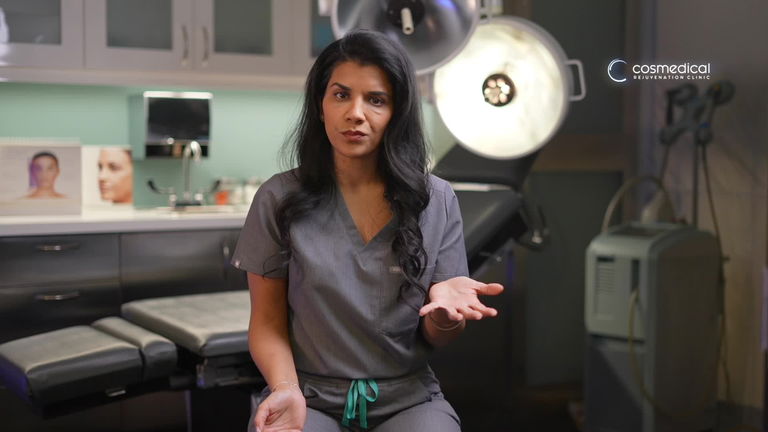
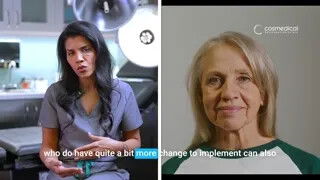
Dr. Priya Kesarwani is the facial plastic surgeon at Cosmedical Rejuvenation Clinic. As a board certified Otolaryngologist Head and Neck Surgeon, Dr. P. Kesarwani has specialized training in addressing diseases, disorders and aesthetic concerns involving the head and neck.
You’ll speak with Dr. Priya Kesarwani directly during your initial consultation. She has a gentle approach and unwavering commitment to achieving the beautiful, natural looking results you want. She takes the time to discuss your goals and assess your situation before providing you with a custom tailored solution. No detail is overlooked. You will appreciate her fastidious and exacting nature — traits that are essential when performing any procedure, particularly those targeting the face!
Dr. P Kesarwani is dedicated to delivering you beautiful results while maintaining excellent patient safety and achieving superior patient satisfaction.






Call (647) 493-8177